Five kilometres of the centre: 1,627 cells, median 1.41 ms, and 49 hitches
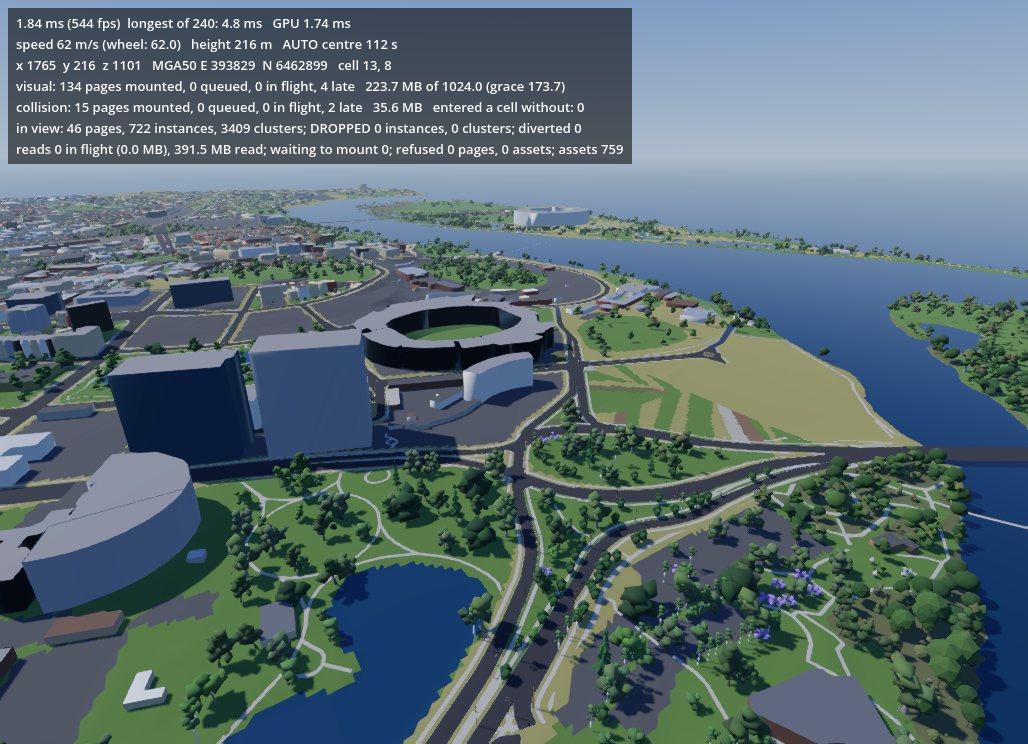
The area is five kilometres square around the centre of Perth, the river and Kings Park: 1,627 cells, plus 629 coarse cells in five levels for the far view. The bake takes 45 seconds and the world is 394 MB on disk.
An automatic flight at 62 m/s, 269 seconds, 16.7 km, on an RTX 5060 Ti at 1028 x 744:
| Frames | 188,027 |
| Median frame | 1.41 ms |
| 95th / 99th percentile | 1.98 / 2.43 ms |
| Longest frame | 277 ms |
| Frames over 16.7 ms | 49 |
| Most in view in one frame | 79 pages, 2,031 instances, 9,724 clusters |
| Entered a cell without collision | 0 |
| Pages refused, instances dropped or diverted | 0 |
| Read from disk | 350 MiB (733 MiB after decompression) |
The median says the steady state is cheap. The 49 slow frames say the arrival of new content is not yet smooth: they come when a batch of pages lands together and the renderer makes their mesh buffers on the main thread. In 18 ticks the mount phase went over its 1,000 µs budget, the longest taking 13.8 ms. The streamer's bookkeeping without mounting never took more than 0.54 ms.
Collision held: 495 collision mounts, the longest 196 µs, and the camera never entered a cell whose collision was not there.
As a check on scale, a stand-in world of 28,224 cells (the Greenwood kilometre tiled) bakes in 6 minutes to 6.1 GB and flies at 100 m/s.
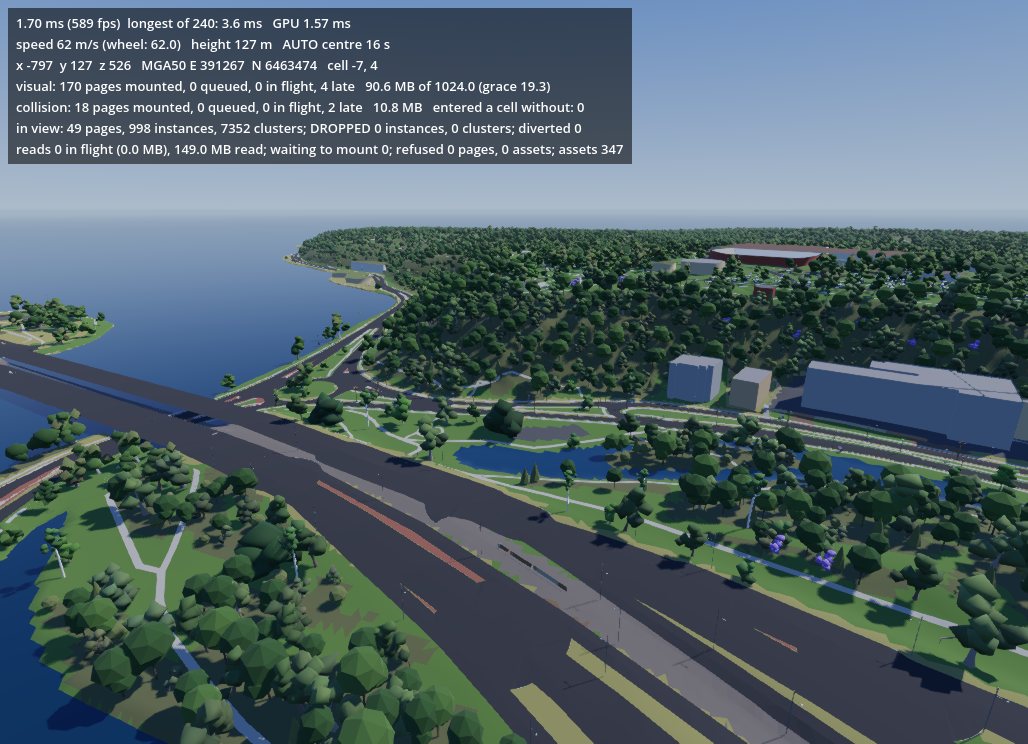
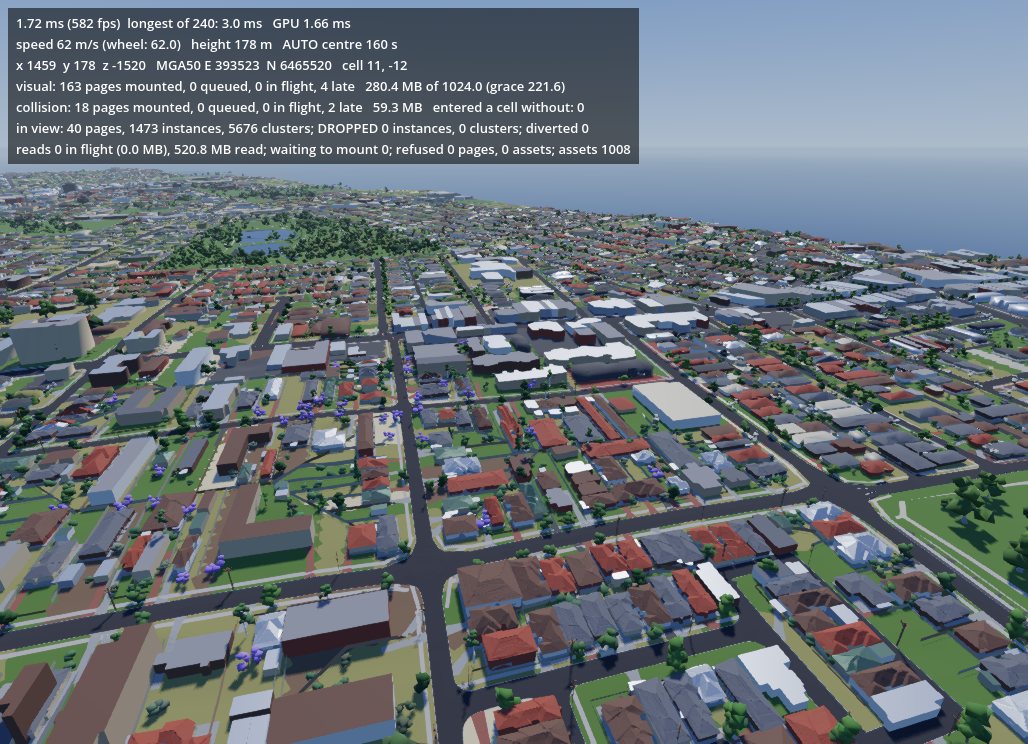
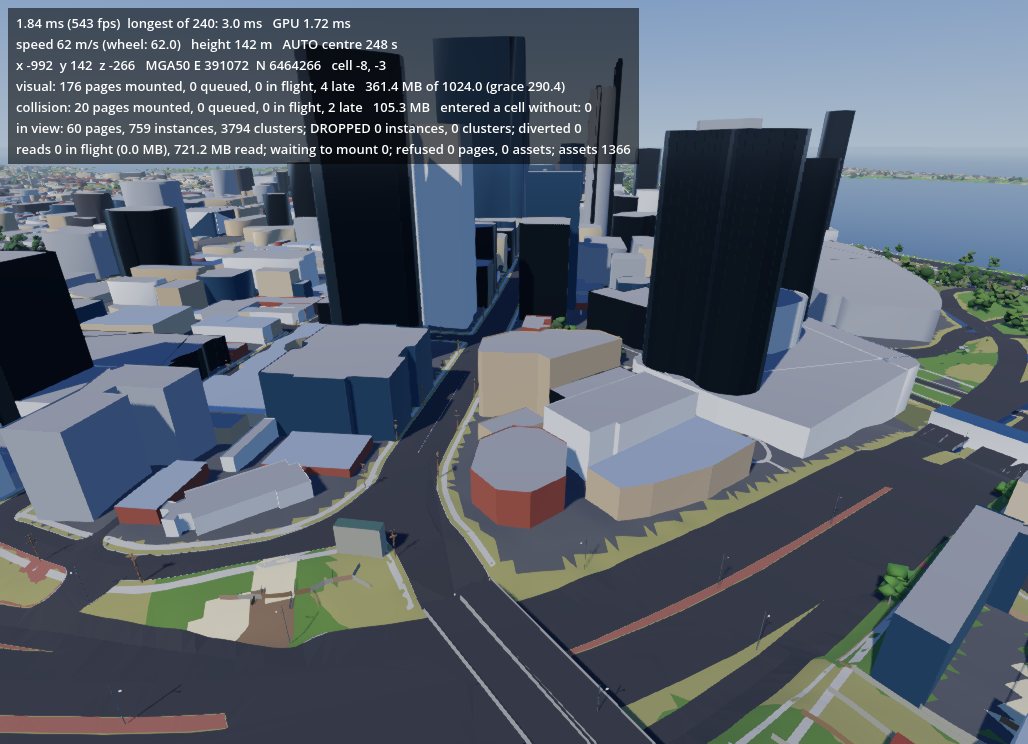
49 frames of 188,027 were over 16.7 ms, 33 of them over 33.4 ms, and the longest was 277 ms. The goal is none. Six pages missed their deadline at the cold start. Tunnels leave gaps in roads, and the river bed and sea floor are not written at all: the water is a flat sheet.
Next: keep the making of mesh buffers inside the mount budget, then fly the whole 21 x 23 km area.